
2026 Presenters
April 16-17, 2026 | Atlanta, GeorgiaThe Educational Event for the Worldwide Wood Products Industries Including Veneer, Plywood, OSB, MDF, Particleboard, Engineered Wood Products, Mass Timber and Value Added

Rich Baldwin
Chief Investment Officer
Risk Advisors LLC
Consulting Associate
Georgia Research Institute
Impact on North American Wood Panel Markets of Tariffs, EUDR, and Other International Trade Issues
Production and consumption of wood panels in North America—both in Canada and the USA—have become increasingly influenced by international issues beyond domestic mortgage interest rates and housing starts. Current international factors include increasing trade protectionism, shifting global compliance standards, and minimizing climate change. Since January 2025, new and oft-changing trade barriers have reduced structural wood panel imports to the USA. Softwood plywood imports from Canada and Brazil, the two leading foreign suppliers, have declined due to higher tariffs that unpredictably change. Two Canadian OSB mills indefinitely closed in recent months as low product prices and higher tariff costs compressed operating margins. Thus far, USA makers have not measurably benefited from the difficulties faced by foreign competitors.The role of greenhouse gases, such as carbon dioxide, in global atmospheric warming has become generally accepted. Given that standing trees store substantial carbon, the European Union (EU) enacted the European Union Deforestation Regulation (EUDR) with the goal of limiting cutting of natural forests. Starting in December 2026 for larger producers and June 2027 for smaller producers, EUDR requires that all wood and wood-related exports to the EU comply with a due diligence checklist. The checklist includes the geographic location and harvest dates of all wood fiber incorporated into those wood products.

Mehmet Sedat Balioglu
Owner/Director
Pika Retech
Re-Engineering Efficiency: Sustainable Nano-Technology for the Wood-Based Panel Industry
The ReJIT Nano-Paraffin Emulsion System exemplifies a pioneering advancement in paraffin application technology, engineered to augment the performance and sustainability of wood-based panel manufacturing. Developed by Pika Retech, this patented nano-emulsion facilitates homogeneous paraffin distribution at the microstructural level, thereby attaining enhanced water resistance and dimensional stability, while concurrently reducing overall paraffin consumption. Mehmet will elucidate how ReJIT’s advanced formulation and particle engineering confer quantifiable benefits in process efficiency, energy conservation, and environmental sustainability. Based on insights gathered from industrial installations across Europe, Asia, and South America, the session will underscore how ReJIT assists in these domains. Manufacturers meet modern performance demands while moving toward greener and more cost-effective production practices.

Chris Beard
Vice President, Building Products Research
John Burns Research and Consulting
Understanding Near-Term and Long-Term Drivers That Impact Wood Panel Usage in Housing
Chris outlines key macroeconomic and consumer trends that will heavily influence wood panel demand in residential construction over the coming years. He provides an outlook on the changing market dynamics that affect homes and apartments being built today and in the future.

Lofton Beasley
WP Product Manager
Weyerhaeuser
Driving Strategic Growth for Engineered Wood Products
Weyerhaeuser has long set the standard for next-gen engineered wood products, including most recently in engineered floor panels (Trust Joist ProPanel) and floor joists (Trust Joist AeroStrand Laminated Strand Lumber). The company has broken ground on its new TimberStrand facility in Arkansas, and meanwhile continues to optimize its sustainable timberlands base, while expanding into biocarbon solutions with potentially multiple facilities across the Weyerhaeuser platform.

Steve Block
Director of Business Development
Omni Tech International
Reducing the Carbon Footprint Wood Adhesives with Soy
The demand for sustainable wood adhesives is rapidly growing and reducing their carbon footprint is at the forefront of new technological developments. Users of wood adhesives desire products that have a reduced environmental impact and an improved safety profile that also meet critical technical performance criteria. Reducing the carbon footprint for these types of products is an advantage that can be realized with U.S. soy-based products, which will be discussed through life cycle analysis methodology. Additionally, soy-based wood adhesives utilize renewable resources, offer lower toxicity, improved energy efficiency, and biodegradation when compared with traditional wood adhesive technologies. Various products are available that demonstrate notable environmental impact benefits, making them ideal for both consumer and industrial use. Some of the other benefits that will be presented include low VOC, formaldehyde free, improved durability, high biobased carbon content, LEED building eligibility, and improved indoor air quality. In summary, soy-based wood adhesives increase the sustainability of end products and offer benefits not realized with synthetic products.

Charles Bradford
Vice President of Procurement
Scotch Plywood Co.
From Ashes to Operations: Leading Through Crisis in the Forest Products Industry
In January 2021, Scotch Plywood’s Waynesboro, Miss. veneer mill was destroyed by fire, resulting in a total loss. Faced with the challenge of sustaining operations, supporting employees, and honoring commitments to landowners and customers, the company’s leadership team made the decision to rebuild the mill while maintaining production with minimal interruption. Over the next 14 months, Scotch Plywood bused employees 120 miles daily to its Beatrice, Ala. facility, transported logs, and operated extended shifts to keep veneer moving and customers supplied. In March 2022, the rebuilt mill came online, reached prior production standards within two weeks, and set new production records within months. This session shares leadership and operational lessons, offering insights on resilience, crisis management, and the importance of preserving trust with employees, suppliers, and landowners.

Jason Camp
Operational Intelligence in Wood Panel Manufacturing: How Systems and AI Are Driving Measurable Performance Results Today
Wood panel manufacturing is being reshaped by operational intelligence—the combination of robust industrial systems and applied AI working together at the mill. At Smartech, a Hexion company, these systems and AI tools are purpose-built and already deployed in operating mills where they deliver real, measurable outcomes today. Smartech will present how a systems-first approach—secure data acquisition, edge computing, and seamless integration with existing mill controls—enables AI applications that optimize quality, throughput, energy use, and process stability. Built on this foundation, Smartech solutions are already helping mills achieve: 5–12% reductions in energy consumption; 10–20% reductions in quality variability and scrap; 2–5% throughput improvement without major capital investment; 10-15% reductions in resin usage through tighter chemistry and process control; faster grade transitions and more consistent product performance. The session will focus on real-world deployment, explainable models, and operator adoption. Attendees will learn how AI can be introduced step-by-step without disrupting operations or forcing full autonomy. From chemistry optimization to press performance and quality prediction, Smartech’s systems and AI are helping mills get more from the assets and resources they already have. Attendees will leave with a clear understanding of how to build the right foundation, where AI delivers the most value today, and how operational intelligence is redefining mill performance right now.
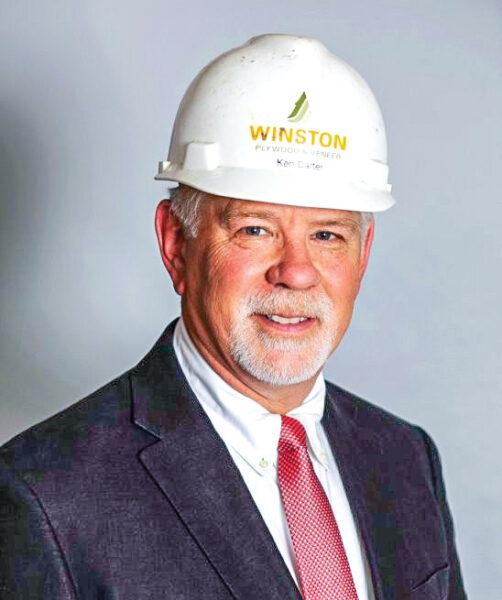
Ken Carter
Vice President
Winston Plywood & Veneer
From Tribulation to Triumph (A Plywood Journey)
Ken talks about how the Louisville, Miss. and area community recovered from a catastrophic event and how Winston Plywood & Veneer became a cornerstone of the recovery and rebuild plan. Topics of discussion include: challenges of working through a FEMA funding project; challenges of starting up a greenfield project after a catastrophic event; challenges of staffing a greenfield project; the challenge of gaining the trust of the community again. And Ken addresses the rewards of seeing the operation’s and the community’s progress over the past 10 years.

Daniel Chastenais
Vice-President Sales & Marketing
Tanguay Machinery
Optimize Your Mill Infeed with Electrical Knuckleboom Loaders
Electrical knuckleboom presentation of various OSB, chipping and sawmill installations, providing and creating ideas to increase mill infeed, improve reliability and safety. Will feature Tanguay’s latest remote-control loaders, the smaller 10-ton class and the monster 70-ton class loaders and the innovative Swap Boom Controls. Will also present the benefits of using electrical power in lieu of diesel to reduce cost and enhance environmental benefits.

Joe Dahlen
Professor of Wood Quality & Forest Products
Warnell School of Forestry and Natural Resources
University of Georgia
Engineering with Nature’s Variability: Southern Pine Wood Properties and Product Performance
Southern pine roundwood is now being harvested more and more from highly productive plantations, where rapid growth delivers impressive yields. However, this shift raises an important question: How do plantation-grown trees compare in wood quality to their naturally grown counterparts? Plantations often produce a higher proportion of lower-stiffness corewood, especially in trees of similar size, making it critical to understand their material properties. This presentation explores both the sources and the scale of variation in wood properties for southern pine across the Southeastern United States. Key drivers of this variation include species choice (such as loblolly, slash, or longleaf pine), forest management strategies that shape rotation length (for example, 25 versus 35 years), and regional differences in growing environments (such as the Piedmont compared to the Coastal Plain). Joe examines core properties including specific gravity (wood density), acoustic velocity, and modulus of elasticity (stiffness), and discuss how these characteristics influence the performance of engineered wood products, including veneer grade yield. And Joe discusses how forest managers are adapting to evolving demands for wood, and how shifts in management practices, such as reducing planting density, could shape the quality of wood available in the future.

Chris Davenport
Sales Manager,
Eastern U.S./Canada Measuring Team
Fagus GreCon
Reducing Material Costs and Improving Board Quality, While Measuring and Monitoring Your Formaldehyde Emissions Efficiently and Effectively
This presentations includes measuring and evaluating of your mat formation process in order to improve/maintain board quality while reducing the amount of material (wood, wax, resin) in every board. As a secondary piece it toucheson the evolution of formaldehyde measurement from the DMC to the 15-minute Gas Analyzer to inline measurement of formaldehyde emissions.

Jörgen Dehlbom
Division Manager
Firefly US
Integrated Solutions To Stop Fire Development
This presentation focuses on the most common ignition sources in wood panel production—hot particles, smoldering, dust-layer heating and mechanical friction occurring in areas such as dryers, dry bins, forming stations, presses and filters. Jörgen will demonstrate how Firefly’s integrated solutions combine preventive spark detection with extinguishing and Quick Suppression Systems to stop fire development before escalation. The session highlights how targeted protection of critical zones helps panel producers avoid unplanned downtime, protect investments and maintain stable production.

Kenth Eklund
Boosting Panelboard Plant Performance Through Targeted Equipment Enhancements
Performance gains in panelboard plants rarely come from starting over—they come from improving the right parts of the process. With deep expertise across the entire panelboard production chain, from fiber handling to finished board, Sunds Fibertech focuses on enhancements that deliver real and measurable impact. By simplifying complexity and strengthening the production stages that matter most, targeted equipment upgrades can significantly improve efficiency and product quality while reducing emissions and operating costs. In this session, Sunds Fibertech will focus on its “Boost” solutions—high technology, innovation driven equipment and system enhancements designed to unlock performance gains in existing plants. Through selected examples across key process areas, the presentation will show how targeted upgrades can boost uptime, capacity, and sustainability, helping panelboard producers achieve tangible improvements without largescale rebuilds.

Lorne Fardy
VP of Product Development
Kadant Carmanah Design
Using 3D Camera Systems to Improve Log Stranding Throughput and Strand Quality for OSB Production
Very little attention is dedicated to tracking and analyzing the log stranding process in an oriented strandboard (OSB) mill. Decisions about how to set up, operate, and maintain a strander and its components are traditionally influenced by the quality and throughput seen downstream at the press. To help green end production managers gain more visibility across their stranding operation in real time, Kadant Carmanah has developed, installed, and thoroughly field-tested the next generation of 3D camera systems within its ARGUS Smart-Connected Technologies platform for the strander. At the strander’s infeed pocket, the log fill camera system now collects more than 50,000 data points every one-tenth of a second, while at the strander’s outfeed conveyor, the strand quality camera system now calculates the geometric distribution of strands. This presentation will demonstrate how these improvements are providing deeper layers of insight with increased accuracy to help green end production managers optimize the capacity, quality, and profitability of their stranding operation.

Dane Floyd
CEO/President
Floyd Holdings
Profitable Solutions to the Residuals Challenge
The forest product industry has, particularly near paper mill closures, struggled to find a home for its residuals. The Floyd Holdings group of companies has been actively involved in building profitable alternative utilization of those residuals. They have been involved in most of the scaled biochar production plants in North America to date, built the most efficient pellet plants and now offer a compelling combined heat and power (CHP) solution.

Paul Gavin
Sales Manager North America
Biele Group
HighEfficiency Plywood Lay Up Line: Maximizing Output and Material Quality through Advanced Automation and Digitalization
This high‑capacity plywood lay up line integrates advanced automation, precise veneer handling and quality‑control systems to deliver exceptional productivity and consistent panel quality. Vision‑based inspection, accurate alignment and optimized feeding and matching processes ensure that every layer—faces, cores and backs—meets the required standards. The implementation of the Biele Operation Advisor enhances efficiency during production changeovers and the management of multiple work orders by providing real‑time visibility of the entire line, centralized production control and data‑driven analytics. Its monitoring and diagnostic capabilities help reduce downtime, optimize production flow and improve traceability, ensuring that only compliant components enter the process. Together, the automated line and digitalization options set a new benchmark for efficient, high‑quality plywood manufacturing.

Todd Havican
Sales Director
Fagus GreCon
Keeping Facilities and Personnel Safer
Spark detections and extinguishment—an overview of sparks and how they are detected and extinguished, including the latest technologies from GreCon to assist in helping keep facilities safer; with emphasis on specific areas of panels facilities that need to be protected with spark detection and a review of what detectors and extinguishment do this the best.

Adam Vanden Heuvel
Aftermarket Product Manager
Tann Corp.
Inside the RTO: From Airflow to Emissions
Explore the inner workings of an RTO in motion—follow the airflow through fan, valves, media beds, combustion chamber, and see how it translates into real-world emissions performance.

Matt Hestad
Accelerating Mass Timber Construction
Mass timber is transforming the built environment by combining design innovation with structural performance and sustainability. This presentation will explore the growth of the U.S. mass timber market specifically in the Southeast, highlighting a variety of projects and advancements that are expanding the use of mass timber construction across various building types. A central focus will be case scenarios like Jamestown’s 619 Ponce City Market, Georgia’s first locally sourced and regionally manufactured mass timber building. Presentation highlights will also include mass timber’s performance and sustainability benefits compared to traditional construction materials, as well as key challenges affecting market growth, including cost considerations, supply chain development, building codes, and market awareness.

Steve Jaasund
Senior Product Manager
Andritz
Exploring the Nature of Wood Dryer Emissions
Panelboard manufacturers are very familiar with the challenges of controlling air pollution emissions from wood drying. Unfortunately, in many cases, an incomplete understanding of the nature of such emissions has led to costly mistakes in the application of necessary air emission control equipment such as wet ESPs and RTOs. A better understanding of the nature of wood dryer emissions can help prevent such costly mistakes. This presentation will discuss the formation and characteristics of the various types of emissions generated by thermal wood drying and the suitability of available emission control technologies for each category of emissions.

Rob Johnson
Senior Vice President of Manufacturing Operations
Boise Cascade
Boise Cascade Wood Products – Focused and Ready
An overview of Boise Cascade Wood Products’ manufacturing footprint and product capabilities along with how Boise sustains readiness to serve customers in all market conditions.

Andrew Kee
Director, Technical Services, Sustainability, & Stewardship
Wanhua Chemical Canada
Sustainable MDI-Based Fast-Cure Chemical Technology for the Production of Composite Wood Products
An innovative and sustainable formaldehyde-free chemical technology suited for the production of composite wood products will be highlighted. Lignocellulosic waste from upstream processes can be upcycled for the production of molded pallets using Wanhua WANNATEpMDI (polymeric methylene diphenylene diisocyanate)–based prepolymer binder chemistry coupled with high temperature compression molding. Pallets that meet all typical requirements are durable, re-usable, and fully recyclable while, unlike conventional wood pallets, do not require kiln treatment to ensure compliance with international shipping requirements. The high temperature compression molding process intrinsically eliminates pests and pathogens, and ensures improved long-term performance by reducing moisture, making pallets lighter, stronger, and less prone to warping, cracking, or mold. The wide range of suitable renewable raw materials, and the advantages of energy efficient production enable substantially reduced embodied carbon when compared to many traditional pallets. The advantages with respect to carbon footprint and reduced environmental impact will be presented.Examples of commercial pallet designs and applications, optimized packaging solutions, and circular logistics solutions will also be described.

Todd Kurle
Business Development Director, North America
Raute Corp.
From Measurement to Margin: Using Analyzer Data to Improve Yield and Production Performance
In today’s challenging market environment, improving profitability often depends more on optimizing existing assets than on new capital investments. This presentation explores how integrated analyzer technologies, combining visual, moisture, and strength measurement, enable more accurate grading decisions, higher raw material utilization, and predictable quality. Real-world examples will show how analyzer data, combined with software, AI-driven grading logic, and targeted upgrades, supports data-driven production, continuous optimization, and measurable performance improvements across veneer, plywood and LVL operations.

Amanda Lang
President & COO
Forisk Consulting
Fiber and Timber Supply and Outlook
Changes in timber markets create opportunities for wood-using businesses. Amanda addresses fiber and timber supplies in the U.S. and provides regional outlooks. She also provides an update on announced mill openings and closings and potential impacts to local wood basins. She includes an update of timber market trends and how these impact supplies of residual fiber and supplies of timber for OSB, plywood, and engineered wood products businesses.

Hiroshi Matsuoka
Chief Leader
Taihei Machinery Works
Efficient Plywood Manufacturing with the Innovative Horizontal Hot Press
Taihei Machinery Works, Ltd., founded in 1925 and headquartered in Komaki City, Aichi Prefecture, Japan (outside of Nagoya), is a trusted supplier of production machinery to the global plywood and LVL manufacturing industry. Taihei currently engineers and manufactures lathe knife grinders & honers, jet veneer dryer systems (including automatic vacuum veneer feeders), horizontal hot presses (including pre-press panel assembly feeders), and a four-headed panel finishing saw system. In recent years, Taihei has sold 80% of dryers and almost 100% of hot presses to Japanese plywood producers. After 40 years of long-distance sales & marketing to Canada and the U.S., Taihei recently opened an office in Eugene, Oregon with demonstration equipment. In the past few years, Taihei has installed in North America 30+ knife sharpening systems, two horizontal hot presses, and one dryer. The unique horizontal hot press—which can range from 60-140 openings according to customer requirements—increases production efficiency, maximizes the uniformity of contact pressure, is easier to install and maintain, does not require a press pit or high ceiling, is safer to operate, and is more energy efficient. Taihei is committed to further expansion of its North American business.

David Neal
Executive Vice President
Georgia-Pacific Building Products
Competitive Advantage Through Relationships
For most businesses, the recipe for long-term success includes the product or service they provide. For Georgia-Pacific, another key ingredient is the unique way our company engages with our people, partners, and the communities we serve. To hear more about this approach, please join David as he talks about GP’s competitive advantage. He’ll take you inside the company’s culture through powerful stories about exceptional leaders who personify the core philosophy of Principle Based Management. Discover why at Georgia-Pacific, what GP does, and how GP does it matters. And walk away with insights on leadership, long-term value creation, and a competitive advantage you can apply to your own business.

Matthew O’Malia
President and CEO
TimberHP
A New Era in Building Envelopes: Wood Fiber Insulation as a Sustainable, High-Performance Alternative to Foam
This session introduces TimberHP’s breakthrough in North American building materials: the first domestically manufactured dry process wood fiber insulation board produced on a continuous press. Unlike foam insulations, this product combines strong insulating performance with vapor permeability, recyclability, and ease of installation—making it a healthy, cost-competitive, and environmentally responsible alternative. Attendees gain insights into how wood fiber insulation advances building science while addressing moisture management, façade performance, and sustainability.

Derek Ratchford
CEO
SmartLam North America
Mass Timber Expansion: The SmartLam Story
SmartLam North America is the largest producer of mass timber components in the U.S., having started up in early 2025 a glulam plant at its cross-laminated timber production facility in Dothan, Ala., complementing an existing facility in Columbia Falls, Mont. Derek will discuss the company’s capital investment and expansion, the advantages and flexibilities provided by the company’s offerings, and the vision for SmartLam moving forward.

David Reed
Technical Director
Timber Products Company
Roll Squeezer Project
The Meinan roll squeezer project was initiated in 2022. The project was based on a need to improve veneer dryer capacity for Timber Products’ plywood manufacturing facilities in southern Oregon. Timber Products leveraged the opportunity to mechanically remove water and avoid increased greenhouse gas emissions from hot air drying. The project considered evaluation of veneer thickness reduction and cellular damage to the peeled veneer. The project also reviewed limitations of roll squeezing for total moisture content removal and throughput of the roll squeezer. The presentation will cover all these topics and strategies employed to address each.

Brian Richmond
Operational Intelligence in Wood Panel Manufacturing: How Systems and AI Are Driving Measurable Performance Results Today
Wood panel manufacturing is being reshaped by operational intelligence—the combination of robust industrial systems and applied AI working together at the mill. At Smartech, a Hexion company, these systems and AI tools are purpose-built and already deployed in operating mills where they deliver real, measurable outcomes today. Smartech will present how a systems-first approach—secure data acquisition, edge computing, and seamless integration with existing mill controls—enables AI applications that optimize quality, throughput, energy use, and process stability. Built on this foundation, Smartech solutions are already helping mills achieve: 5–12% reductions in energy consumption; 10–20% reductions in quality variability and scrap; 2–5% throughput improvement without major capital investment; 10-15% reductions in resin usage through tighter chemistry and process control; faster grade transitions and more consistent product performance. The session will focus on real-world deployment, explainable models, and operator adoption. Attendees will learn how AI can be introduced step-by-step without disrupting operations or forcing full autonomy. From chemistry optimization to press performance and quality prediction, Smartech’s systems and AI are helping mills get more from the assets and resources they already have. Attendees will leave with a clear understanding of how to build the right foundation, where AI delivers the most value today, and how operational intelligence is redefining mill performance right now.

Jim Salchenberg
Director of Strategic Projects
Roseburg
Roseburg’s Capital Evolution: From Legacy to Billion Dollar Investment
Jim offers an inside look at how Roseburg scaled its capital investment strategy from $70 million to more than $1 billion in the post-COVID era. Building on Kenneth Ford’s foundational legacy, Jim’s presentation reveals Roseburg’s proven CapEx process that delivers success through operations-led project ownership and integration of engineering, project management, and field teams. This presentation includes a brief overview of some of the significant investments by Roseburg in the last five years.

Pat Schleisman
Engineered Wood Specialist
APA—The Engineered Wood Assn.
Mass Timber Basics
Learn about engineered wood products, especially mass timber, and how (and why) mass timber has been incorporated into projects across North America. Explore glue-laminated (glulam) timber and cross-laminated timber (CLT), covering manufacturing processes, design specifications, performance and environmental benefits through real-world case studies.

Bijan Shams
Vice President, Founder
Cogent Industrial Technologies
Capital Projects 4.0: Building the Next Generation of Smart Wood Panel Manufacturing Facilities
As the wood panel industry enters the digital era, competitive advantage depends on how plants are designed—not just how they operate. In this presentation, Bijan introduces Capital Projects 4.0, a framework for building new wood panel facilities that integrate automation, connectivity, and data analytics from the ground up. Drawing on three decades of capital project experience, he explains how early digital design decisions—spanning FEED through commissioning—enable AI-ready, continuously optimizing plants that deliver measurable improvements in uptime, quality, and energy efficiency. Attendees will learn how to design a digital thread connecting all stages of a greenfield project; specify smart instrumentation and open data architectures for seamless IT/OT integration; prepare plants for AI-driven optimization and predictive insights from day one; leverage real-time data for continuous improvement in uptime, quality, and energy use.

Scott Stamey
President—Southeast Region
Cooper Tacia General Contracting Co.
Rethinking Project Delivery: Contract Strategy as Risk Management
Many wood products manufacturing projects continue to rely on a progressive design–bid–build approach that can struggle to keep pace with today’s technical, schedule, and integration demands. While familiar, this model often leads to late design alignment, frequent change orders, and difficulty managing cost and risk. As capital projects become more complex and internal project management expertise declines, alternative strategies are increasingly necessary. This presentation explores contract approaches that emphasize early collaboration, balanced flexibility and certainty, and shared accountability. Drawing from industry experience, it will examine variations of EPC/design–build and construction manager at risk (CMAR) and how these models can improve coordination, clarify risk allocation, and support more predictable outcomes. The session is intended to encourage discussion around contract selection as a strategic decision for modern wood products facilities.

Husni Thamrin
Overseas Business Development and Sales
Taihei Machinery Works
Efficient Plywood Manufacturing with the Innovative Horizontal Hot Press
Taihei Machinery Works, Ltd., founded in 1925 and headquartered in Komaki City, Aichi Prefecture, Japan (outside of Nagoya), is a trusted supplier of production machinery to the global plywood and LVL manufacturing industry. Taihei currently engineers and manufactures lathe knife grinders & honers, jet veneer dryer systems (including automatic vacuum veneer feeders), horizontal hot presses (including pre-press panel assembly feeders), and a four-headed panel finishing saw system. In recent years, Taihei has sold 80% of dryers and almost 100% of hot presses to Japanese plywood producers. After 40 years of long-distance sales & marketing to Canada and the U.S., Taihei recently opened an office in Eugene, Oregon with demonstration equipment. In the past few years, Taihei has installed in North America 30+ knife sharpening systems, two horizontal hot presses, and one dryer. The unique horizontal hot press—which can range from 60-140 openings according to customer requirements—increases production efficiency, maximizes the uniformity of contact pressure, is easier to install and maintain, does not require a press pit or high ceiling, is safer to operate, and is more energy efficient. Taihei is committed to further expansion of its North American business.

Jowan Toor
Vice President of Operations
KTC Industrial Engineering
Constraints to Capacity: Debottlenecking and Upgrading Infrastructure in an EWP Manufacturing Facility
Engineered Wood Products (EWP) manufacturing facilities often face production limitations due to process bottlenecks and aging infrastructure, restricting throughput, energy efficiency, and operational flexibility. This industrial project presents a structured engineering framework to identify and eliminate capacity constraints across critical production stages, including drying systems, energy supply, and pressing and bonding operations. A data-driven methodology is applied using mass balance analysis to quantify material flow inefficiencies and pinpoint bottlenecks affecting overall plant performance. Dynamic process simulation is utilized to virtually evaluate optimization scenarios for drying and energy systems, enabling performance improvements without disrupting ongoing operations. Upstream system optimization is aligned with downstream bonding and pressing requirements to ensure stable, high-efficiency production across the full manufacturing process. Infrastructure upgrades are supported through high-accuracy 3D laser scanning for existing plant conditions, BIM-based integrated design, and detailed structural steel engineering to ensure constructability and seamless integration. This integrated approach minimizes project risk, reduces implementation downtime, and supports scalable facility expansion. The project demonstrates how targeted debottlenecking and infrastructure upgrades can deliver significant production increases, energy savings, and reduced unit manufacturing costs. The resulting strategy transforms manufacturing constraints into sustainable competitive advantages, supporting long-term operational excellence and market responsiveness in the EWP sector.

Guillermo Velarde
Principal
AFRY Management Consultng
Future of the North American Wood Panel Industry:Outlook and Opportunities in the Composite and Structural Market
The domestic wood products and surfaces industry is interconnected in the global market with many regions and players looking to enter and capture market share. Currently, global macro-economic conditions and market constrains still make the North American market an attractive region for exports, new investments and acquisitions, in both wood-based panels and engineered wood products. This presentation will examine the status of the industry and opportunities available for the future of the market. In North America, the “winners” will be those ready for the shifts and not waiting to react. These and other relevant questions will be addressed to help the industry make informed decisions to grow and build value.

Brian Via
Director, Forest Products Development Center
Auburn University
Soy Flour–Modified Adhesives for Improved Wood Panel Manufacturing
Soy flour (SF) incorporation into hot- and cold-pressed systems—pMDI, PF, and Isoset—offers both performance and processing benefits for engineered wood products. SF absorbs moisture in the furnish, suppresses steam generation during pressing, and increases internal board pressure, improving early-stage bonding and reducing common pressing defects such as blow-through, springback, and warp. The steam-suppression effect has been clearly demonstrated in PF plywood production. Full-scale mill trials have been conducted for preservative-treated wood (Isoset) and two MDF manufacturers using pMDI, validating SF as a practical, biobased co-reactant. In a recent PF plywood trial (August 2025), wheat flour was replaced with soy flour, resulting in a 15% reduction in PF resin usage while maintaining D-6 and boil shear properties. And potential increase is press speed was also discovered due to soy’s tolerance for moisture causing blows. Laboratory testing confirmed compliance with key APA PS-1 standards, and follow-up independent testing is planned to validate these results for potential commercial adoption.

Sebastian Voelker
Chief Sales Officer
Dieffenbacher Energy Austria
Fiber Recovery to Power Generation: Dieffenbacher’sClosed-Loop Panel Solutions
Fiber Recovery to Power Generation: Dieffenbacher’sClosed-Loop Panel Solutions explores how integrated process design can transform panel production facilities into highly efficient, self-sustaining operations. The presentation outlines how recovered fiber, fines, and process residues can be redirected into optimized energy systems to generate heat and power, reducing waste, lowering fuel consumption, and improving overall plant efficiency. By connecting material recovery with modern combustion and energy generation technologies, Dieffenbacher delivers a practical, closed-loop solution that enhances sustainability while strengthening operational performance and cost control.

Tom Wechsler
Founder
Wechsler Technologies
Hot Oil System Safety: Early Detection, Fluid Life Extension, and Fire Mitigation Technologies
In panelboard plants, thermal fluid (hot oil) systems represent one of the highest fire-risk areas, where poor fluid condition, leaks, and degradation of equipment can lead to catastrophic damage and extended downtime. This presentation will outline how targeted inspection, online fluid maintenance, and improved monitoring and active technology at known leak points can significantly reduce these risks and extend system life. Wechsler Technologies has developed practical methods and technologies to help operators detect system deficiencies early and keep thermal oils within safe operating limits. These include online fluid maintenance systems, such as the FluidGuard Flashpoint Recovery system for restoring thermally degraded oil, FluidClean and FluidClean Ultra systems for removing particles and sludge from operating systems, and PumpGuard pump monitoring and active fire suppression solutions at critical leakage points, as well as other technologies and methods. Case examples and field experience will be used to illustrate how these tools can be integrated into existing hot oil systems to improve safety, reliability, and overall lifecycle cost.

Timothy Young
Professor Emeritus/Interim Director
Data Science Institute
The University of Tennessee/School of Natural Resources
How Machine Learning and AI Will Transform the Leading Companies of the Panel Industries
Machine Learning (ML) and Artificial Intelligence (AI) are transforming the industrial and business landscape at an unprecedented pace—what many are calling the Fifth Industrial Revolution. For leading companies, ML has become a powerful tool for improving profitability and operational performance. By uncovering hidden correlations, complex hierarchical interactions, and unknown sources of variation, ML provides “new eyes” for understanding and optimizing processes. These algorithms are emerging as modern root-cause analysis tools, identifying novel pathways to reduce process variation, lower operational setpoints, increase line speeds, and decrease per-unit production costs. As a result, companies that adopt AI technologies are rapidly gaining advantage over those that do not. This presentation introduces the fundamentals of ML applications for panel manufacturing and explores real-world case studies demonstrating successful implementation. It also addresses the evolving role of humans in adapting to AI-driven environments, emphasizing collaboration between human expertise and machine intelligence in this new industrial era.
2026 News

10th Annual Panel & Engineered Lumber International Conference & Expo Announced
We are pleased to announce that the tenth Panel & Engineered Lumber International Conference & Expo (PELICE)will be held April 16-17, 2026, and once again in the Grand Ballroom North of the Omni Atlanta Hotel at Centennial Park (previously named...
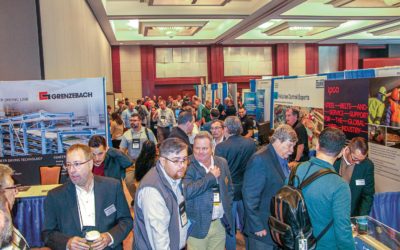
PELICE 2024 Touches All The Bases (And Then Some) As Attendance Sets Record
ATLANTA, Ga. - The ninth Panel & Engineered Lumber International Conference & Expo (PELICE) achieved a participation record with 516 industry professionals (producers, equipment representatives, consultants, etc.) attending on-site March 14-15 in...
PELICE 2024 Covers The Bases & Then Some: Martin, Gray, Dieffenbacher Start It Off
The ninth Panel & Engineered Lumber International Conference & Expo (PELICE) set a participation record with 516 industry professionals (producers, equipment representatives, consultants, etc.) on site March 14-15 in the Grand Ballroom North of the Omni Atlanta Hotel at Centennial Park in Atlanta, Ga.
Registration is now open
April 16-17, 2026 | Atlanta, Georgia
PELICE is the Educational Event for the Worldwide Wood Products Industries Including Veneer, Plywood, OSB, MDF, Particleboard, Engineered Wood Products, Mass Timber and Value Added